

Makerbot Replicator 2 3D Printer Review
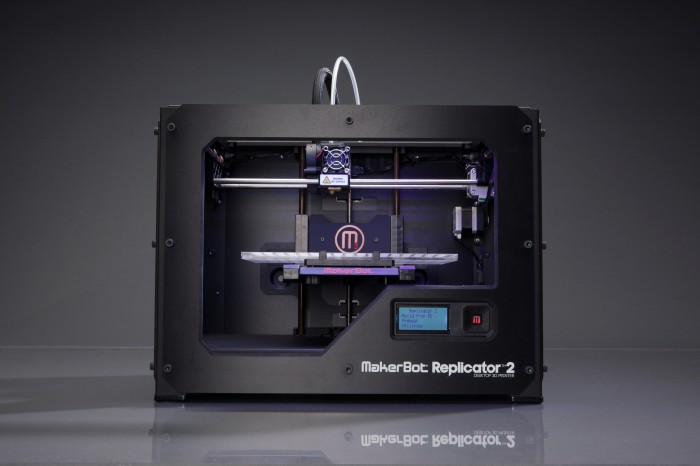
MakerBot Replicator 2... a creative person's dream machine!

3.5 out of 5 stars!
The MakerBot Replicator 2 is a great took for rapid prototyping. It’s easy to use, work on and operate on when necessary. The software is equally as great. This printer is not for actual production but rapid prototyping. 90% of people that gave the Replicator 2 a low number of stars had no idea what they were doing and caused their own problems. It a great product!
JakeMakerbot Replicator 2 Review
The MakerBot Replicator is a solidly built and compact 3D printer that is available on Amazon for $2,899.99. Despite its hefty price tag, the MakerBot Replicator 2 3D Printer offers quality design, efficiency, and convenience. However, there are a few issues regarding the printing quality itself, and this will be discussed in detail later on. Amazon reviews have given it an average of 3.5 stars out of 5, which is not all that bad.
An Overview
The Replicator 2 is a fourth generation design of the original model. Makerbot, the company behind it, is now considered the market leader for home or office-based 3D printing. It is now owned by 3D systems, one of the largest 3D printing manufacturers and 3D imaging specialists in the world. Makerbot and its CEO, Bre Pettis have reached mainstream attention when they were first featured in an original documentary film, Print the Legend. The movie can be viewed on Netflix.
Despite an average Amazon rating of 3.5 stars out of 5, the Replicator 2 has garnered mostly positive reviews. Some users are amazed by the results and gave it a full five stars. Others were not so happy, giving it only one star. They mostly complained about the steep learning curve and poor consistency in delivering quality printed results. Others remained neutral and emphasized that the product has its own unique advantages and disadvantages. It is up to the buyer to have a full understanding of this before raising his or her expectations.
Makerbot: About The Company
The company was founded in Brooklyn back in 2009 by three robot specialists. Bre Pettis is one of them. The company focused on building 3D printers. It progressed from the initial developments of the RepRap Project, which is an initiative for developing a 3D printer that can build most of its own parts.
The Makerbot Smart Extruder is now more advanced. It was developed to address the concern of interrupted work flow when a traditional extruder stops printing. You would have to start a new print job all over again. Another problem is the natural wear and tear of the traditional extruder. Makerbot’s Smart Extruder is designed to detect an absence of filament in real time. This allows you to add more length of filament as necessary. The Smart Extruder is built to be swappable and just takes a few moments to install without having to deal with nuts, bolts, and screws. There are issues, however, with occasional clogging. According to Makerbot, this can be minimized by waiting for the Smart Extruder to cool down completely before turning the unit off.
The Makerbot mobile app, which is only available on Apple’s App Store, is an extension of the capabilities of the 3D printer. It allows over-the-air control of the printer through your mobile device if you’re connected to a decent cellular or wifi network. The app enables local storage of your own 3D files to be printed and also gives access to several more designs stored online in Makerbot’s Thingiverse, where you can like, share, and collect designs from other users. Think twice though since this isn’t yet available on Google’s Play Store if you happen to be an Android user.
Makerbot also hosts several special events in its own stores. They are mainly classes both aimed at kids and adults. Kids will be taught how to make pet tags, Halloween masks, Thanksgiving place card holders, and whatnot using the Replicator 2 3D Printer. The website contains scheduled postings of such events.
Product Specifications
The most striking thing about the unit at first glance is its compact footprint. The manufacturer has delivered its promise of a 3-D printer that is convenient for the home, office, or any area with limited space. The volume specifications without the spool are 19.1 x 12.8 x 14.7 inches. Adding the spool increases the width slightly by 4 inches. The product weighs at a decent 25.4 pounds. Transferring the unit from one area to another should be a breeze when gripped with both hands.
The chassis is rigid and stable to take the strain of moving mechanical parts, resulting in a smooth run. Its powder coated steel layer shows a clean matte finish equating to a professional look. PVC panels make up the body and the build platform is acrylic. The XYZ bearings that control the nozzle are made of oil-infused bronze that’s wear-resistant. Stepper motors have a 1.8º step angle with 1/16th micro-stepping. The maximum build volume is a significant upgrade to the previous model. It has been increased to 37% and is now at 11.2 x 6.0 x 6.0 inches. This means it can now produce much bigger projects compared to older models.
Because it now uses a new form of bioplastic called PLA, the printer uses 32% less power compared to the previous material, PVS. PLA is a renewable type of bioplastic that sticks to the platform with greater stability. This lessens peeling, sliding, or shrinking during print jobs. PLA comes in a greater but limited variety of colors so one can form more accurate representations of models.
A three-point levelling system is a new feature. It now enables you to adjust the build platform at the required level with greater ease, less time, and more precision.
The package also comes with improved MakerWare, a program that uses a faster algorithm for slicing models. It has an easy-to-use interface so anyone can prepare 3-D models really quickly and intuitively.
Any Negatives?
The main problem still encountered with regards to 3D printing is its overall unpredictability. The room for error increases with the size of the project. This is because bigger projects have areas that cool sooner than others resulting in cracks. There is also an issue with the project not adhering properly to the yellow Kapton tape on the build platform. It also has the tendency to tear if you’re not careful enough pulling the project from the machine. There are also issues with color mixing, clogging, and failed prints but these can be resolved with a few minor adjustments.
Online Support
Online support for the Replicator 2 is available six days a week from 9 am to 6 pm ET. You can contact them through info@3dprintinggeeks.com. An online team is on standy-by and ready to help you with your queries.
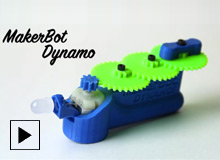
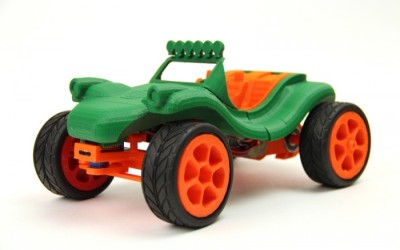
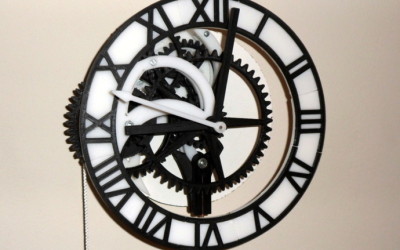
Replicator 2: Project Samples
Add To Cart
Makerbot Replicator 2 Video Gallery